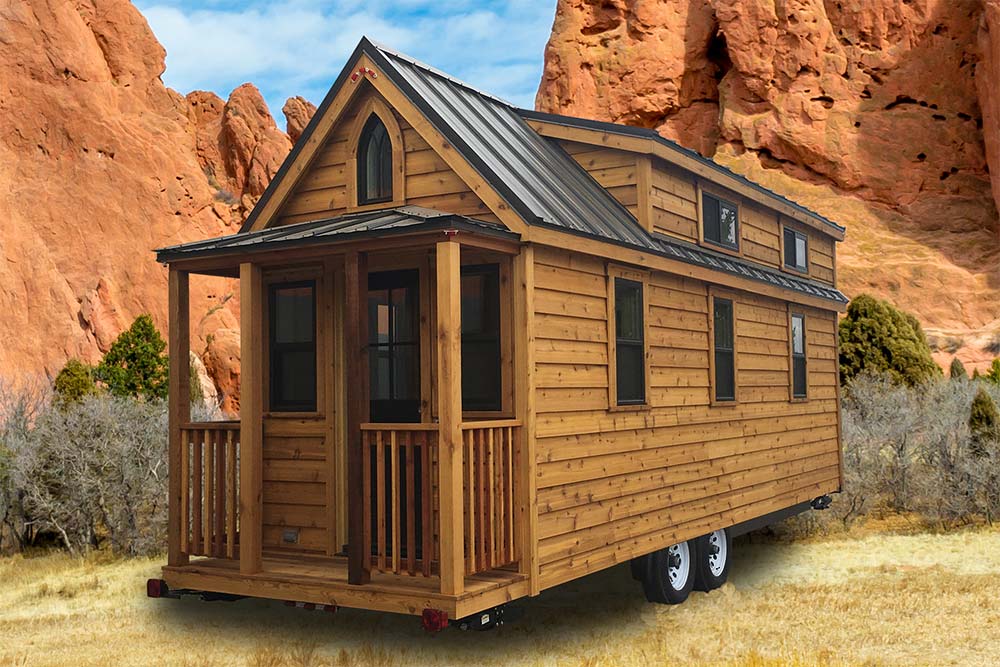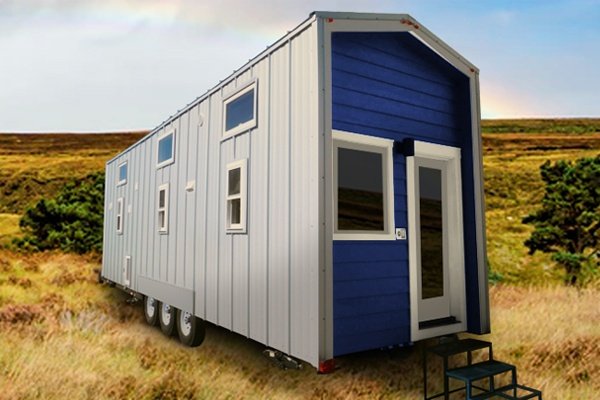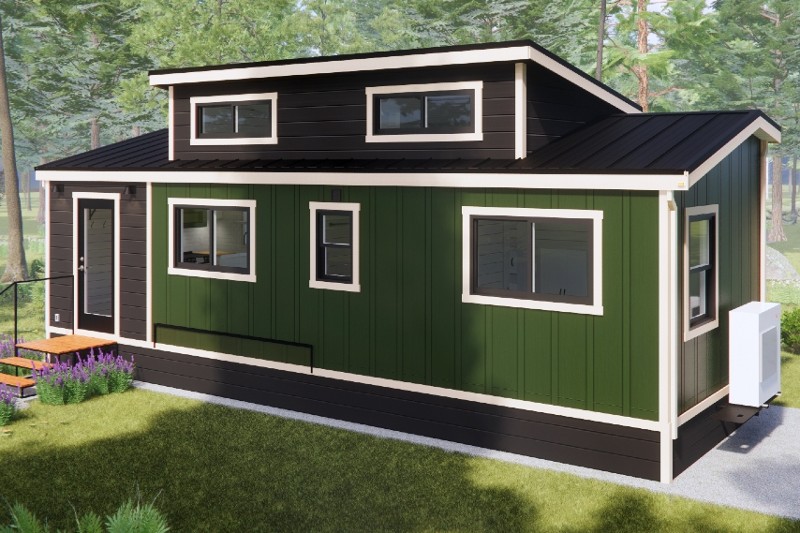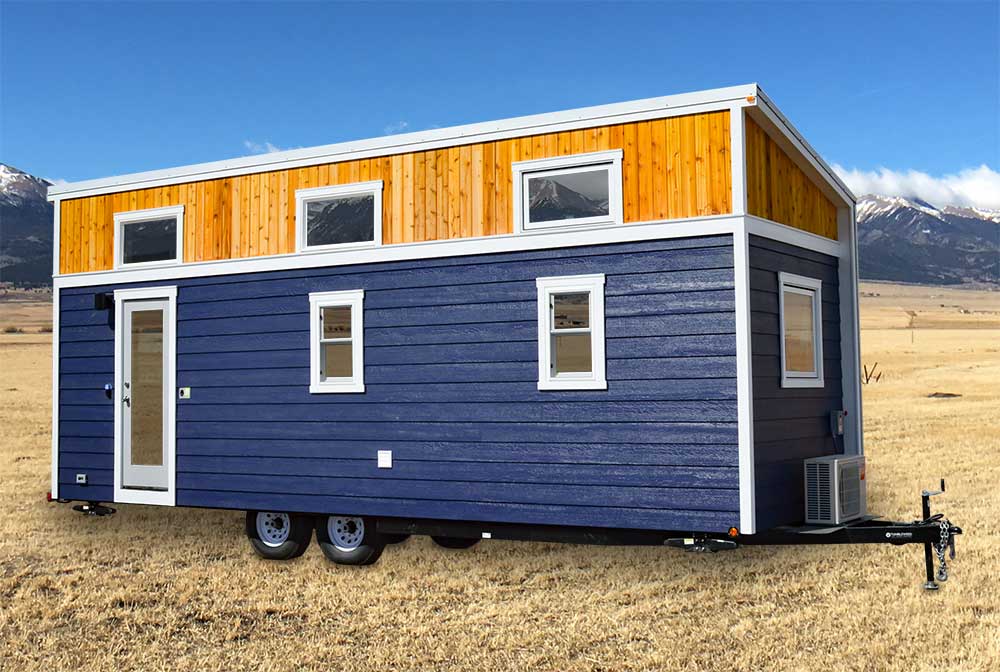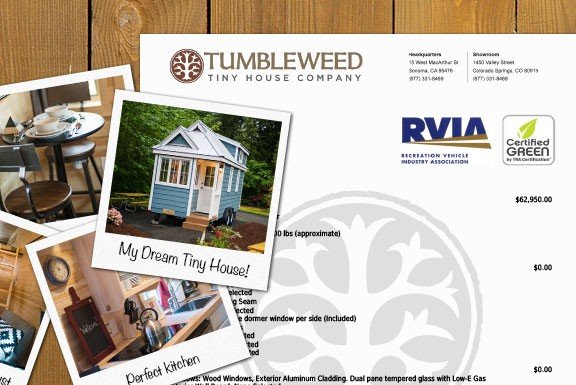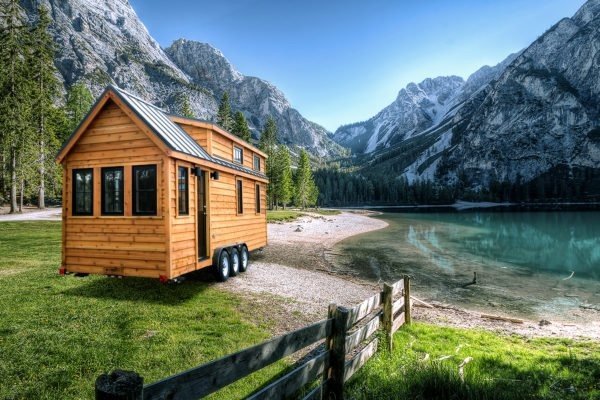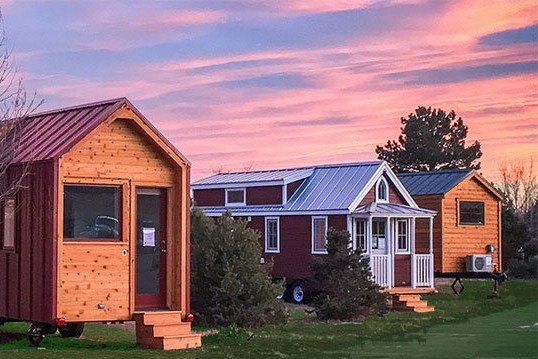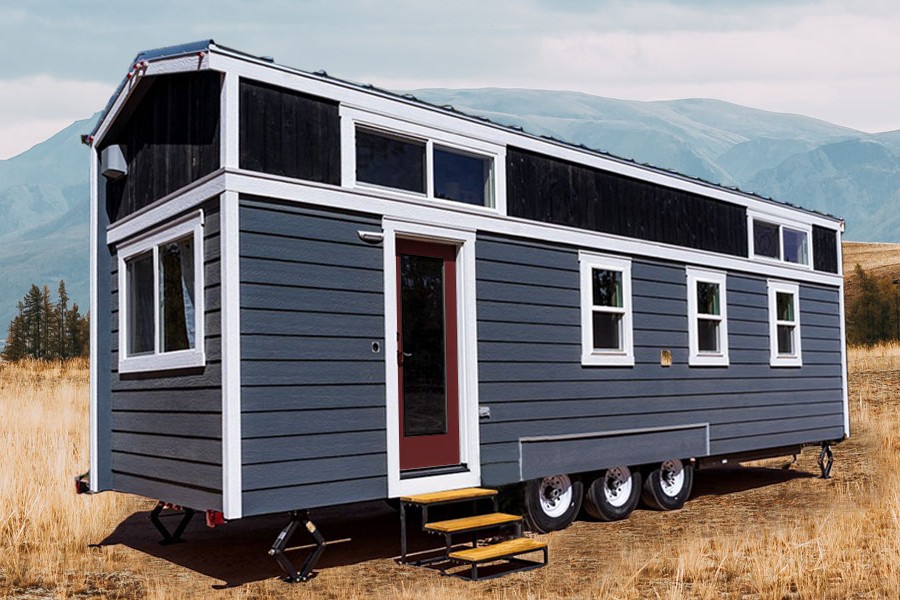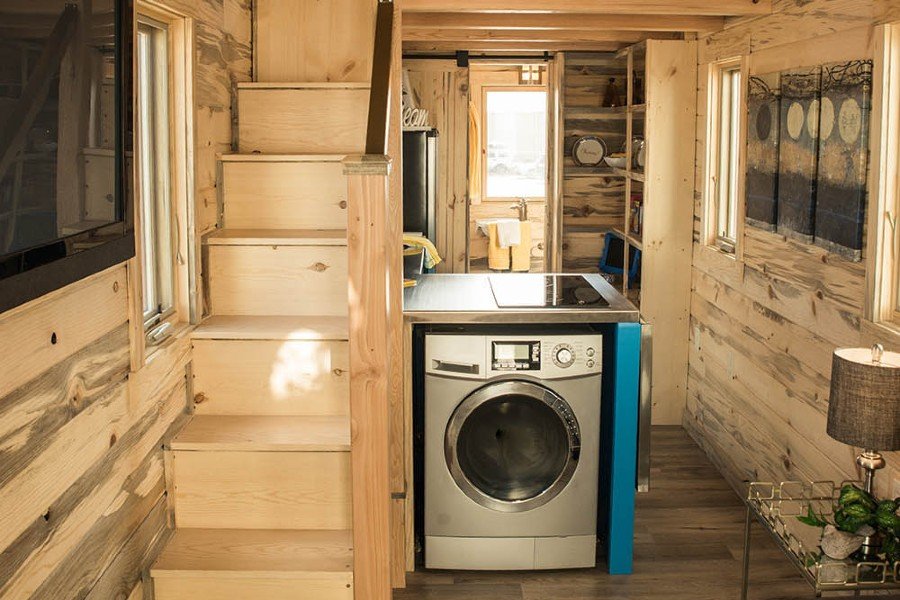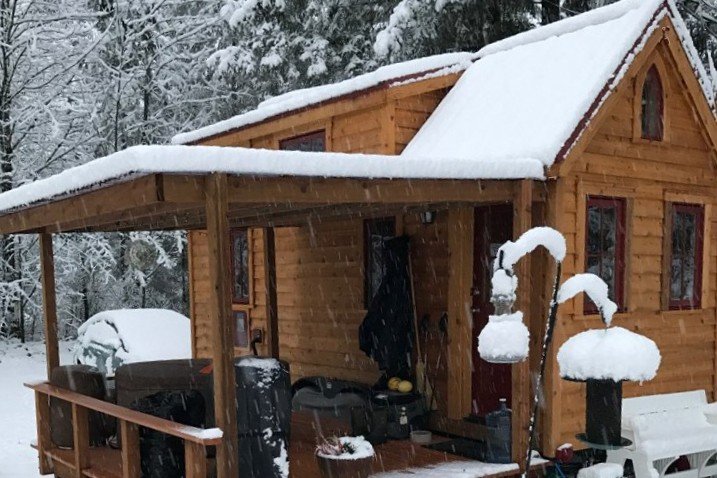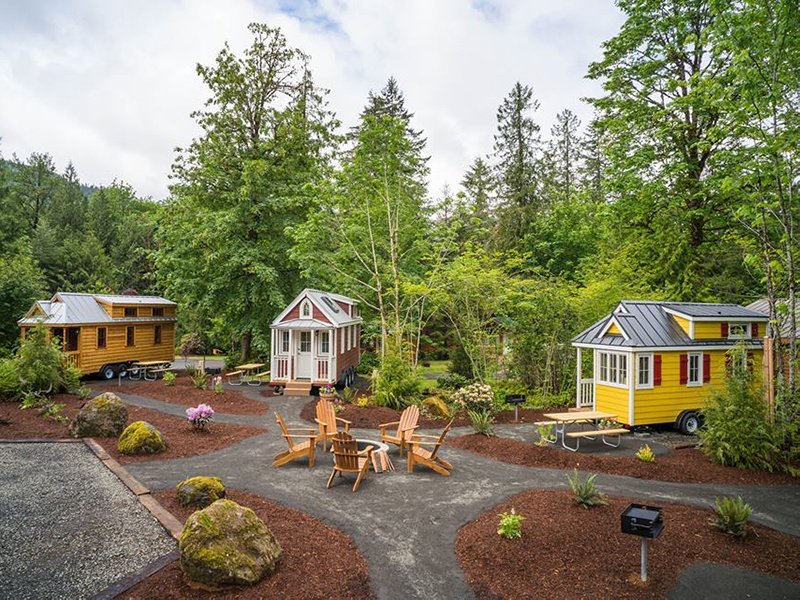
http://www.tumbleweedhouses.comWith wheels, traditional proportioning and archetypal form, these little structures are designed to be portable and can, essentially, be sited anywhere you can park a travel trailer.* They range from about 50 to 130 sq ft. Purchase yours ready-made or buy the plans to build it yourself. These homes are stationary designs built as a main house or guest house. Most of the plans have an optional extra bedroom in back. The house sizes range from 261 sq ft up to 874 sq ft. We do not build the Cottages. They are designed to be built on site with a local contractor of your choosing.Tumbleweed Tiny Houses CompanySteve Weissmannsteve@tumbleweedhouses.com
15 West MacArthur St95476SonomaCaliforniaUnited States
Isabel Winson-Sagan is a resident of Santa Fe, NM, and has a degree from the University of New Mexico in religious studies and evolutionary anthropology. She will soon be attending the University of Aberdeen in Scotland for further work in religious studies. She just bought the trailer for her Tiny House, and will be starting her build in the next couple of months.
If I were forced to provide a single,
unqualified answer to the question, “Why are you building a tiny house?” I
would have to say: instantaneous love. I was 8 years old when I first saw the inside
of an RV trailer, while on a road trip with my parents. Afterwards I demanded
of my mother, “Why don’t we live in one of these?” On some level I was wounded.
My parents had always known about these perfect, tiny, ship-like houses on
wheels, and had chosen to abide in our irritatingly stationary home instead.
Perhaps
this instant love of mine was influenced by my fascination with hobos during
the Great Depression. I didn’t understand the economic desperation or the myth
of the West that had created these men. I only saw that they were tough, that
they had what it took to ride the trains. They were free. Somehow the ideas of
homelessness, wheeled vehicles, and the ability to carry your home with you
became crossed in my mind. An RV seemed to embody both that feeling of home and
the ability to leave home to my 8-year-old self.
My
childhood dream of living in an RV eventually subsided, and I moved on to other
pursuits. Skip forward a decade or so, to the day when I stumbled on the
website for the Tumbleweed Tiny House Company. And it happened again. I was
instantly, irrevocably in love. And this time it was less impractical. In fact,
it seemed that here was the answer to many of my personal dilemmas: how to live
sustainability in a culture of consumerism that was simultaneously facing a
housing crisis, how to travel the road and feel safe, and how to have my own
home while moving across the country for graduate school. I was in love with the
aesthetic of Tumbleweed, and with the lifestyle it seemed to offer.
Shortly
after I had made the somewhat wild decision to actually build my own house, I
began to connect the project to my academic interests. My fields are religious
studies and anthropology, and I realized that the tiny house could be studied
as material culture, with my own experience as the basis of anthropological
research. So I’ve started to study sacred architecture as well as building
science, and I hope to one day include my tiny house experience as part of a
graduate thesis proposal.
As
a woman, a Jew, a woodworker, and the anthropologist conducting a mild field
study on myself, several questions have been raised so far. How significant is
it, in this day and age, for a woman to be working in construction, or even to
be building her own house? What does it mean to be an American Jewish
craftsperson, when almost the entirety of my family’s material culture was lost
in the pogroms and the Holocaust? What does it mean to live in a home purposely
built for wandering, when the anti-Semitic legend of “The Wandering Jew” has
been around since the Middle Ages?
I woke up in the middle of the night a few
months ago, jerked awake with the force of one thought: I am building Baba
Yaga’s house. Baba Yaga (roughly translated to “demon grandmother”) is a
Russian fairytale character, a witch who lives in a house on chicken legs. She
is a symbol of Russia. So why am I building her house? As I build, I’m also
attempting to deconstruct the folk tale of Baba Yaga, in order to shed some
light on my own roots, and my own desire to build a little house in the woods.
It is a house that walks, and is full of either danger or help, for those who
know how to ask for it.
“Little
hut, little hut, stand with your back to the woods, and your front to me!”
And
the hut turns around, and the protagonist enters. This is the beginning of my
tiny house journey. Possibly some of my questions with be answered, or there
may be new questions raised. But in the meantime, I’m building, researching,
and documenting my tiny Baba Yaga house.
Sicily Kolbeck is 12 years old. She builds houses and plays travel softball south of the Mason-Dixon line. She is currently documenting her tiny house project, the Petite Maison. She hopes to live in her tiny house full-time when it is completed, and maybe even take it to college in Washington State (go, Huskies!).
Why do people live tiny? Is it to simplify, or is it an
economic decision? Whatever the reason, people have been downsizing their lives
for many years. By simplifying their lives they have found inner happiness
rather than external happiness in the form of the materialistic ideals.
My
decision to build a tiny house was partly economic, partly the desire to be
free. Freedom is one of the main reasons I decided to build my tiny house. Everyone
at some point in their life wishes to have freedom; my wish started at an early
age, and it began with a simple desire to build a fort.
As long as I can remember I have loved tiny spaces. When I
was younger my family and I lived in a house that had the most perfect spot for
forts: a built-in seating area that was about 2 ½ feet tall; I would take three
of my dad’s longest golf clubs, two chairs, blankets, and pillows and make a
fort. I would watch movies in there, play games, and play with (or torture) my
cat. It was just the right space for me; I never needed anything more. I loved
the coziness of it, the fact that I could see all of my things, and that it was
all mine. No one could take it away and no one but me was in charge of it. And
it cost nothing!
Cut-out side for Sicily's bird house prototype
Building forts was just the tip of the iceberg of frugality
and simple living. I learned about money and sensibility at a young age. When I
was five my mom and dad decided to give me an allowance. Those four quarters
were dear to me every time I got them. My family thought I should learn to
budget my money (plus they were tired of me asking for everything), and budget
I did. If I wanted something I took hours to decide to buy it; many times I
would walk away from a purchase because I thought, “Am I really going to use
this?” At five!
I learned to budget my money so well that my parents called me “The
Bank of Sicily” because I would loan them money; when I started to joke that I
would have to start charging interest, my customer satisfaction rate plummeted.
This is just one form of my freedom that I talked about. I am very lucky that
my parents trust me enough to give me freedom: financial. Having my own budget
raises awareness about what I am buying and bringing into my life.
When I finally got my customers back with the promise of
free hugs and kisses with every transaction I decided to tell them my idea for
building a tiny house. My parents were accepting and willing to give me the
support I needed; after I decided to take on this task, I told everyone. Trust
me, when I say, “I told everyone,” I mean everyone. If someone was walking past
me in the street I would tap them on the shoulder and say, “I’m building a
house!” That was how excited I was.
However, when I told my softball team I got
less-than-enthusiastic replies: “Why?” “Oh, cool,” and my personal favorite,
“Why don’t you just buy one from Home Depot?” I want to build one that can move
and one that is my own. I was first introduced to tiny houses by Deek
Diedricksen; his videos showed me that I could build a house with next to no
money and still have it be comfortable and inviting and my own.
I first saw Deek when I was randomly looking up things on
YouTube. I saw his Little Blue Bump, and I thought it was so interesting what
he was doing. I started watching more of his videos, and I found an interview
with Jay Shafer, which then led me to the Tumbleweed Tiny House site. I
thought it was wonderful that Jay was building these houses and people were
living in them on a day-to-day basis. I guess this is how I became so
interested, and with trial and error I made plans and blueprints and 3D models.
My biggest supporters have been my mom and dad. My mom is
the teacher/principal/founder of HoneyFern. She is the one that has encouraged me to do
this as a school project; she has been my impromptu publicist; she has
supported me on Facebook, Twitter, and any other social media site that she can
think of.
My dad has taught me how to
use the tools - such as a jigsaw, a table saw, nail gun, and belt sander - that
I will need to build my house. To learn how to use the tools, I have already built
a vegetable oil heater and a tiny teardrop trailer birdhouse, and now I am
working on a composting toilet. I am so grateful for all of my supporters on
and offline.
(For more information on supporting Sicily, please visit her website.)
Freedom to me means I can support myself in a sustainable
way. Building a tiny house can give me stability, possibly for the rest of my
life if I build the house well. Building a house would give me the life skills
that really matter, such as using tools for construction. Building the house I
can know what labors go into a home and truly appreciate what I am living in.
Watch out world, we've got another young builder! 14 year old Emma Keely is getting ready to work on a Fencl of her very own. And unlike other high school students, she'll
be getting a little more than extra credit for her project- Emma is home schooled. As a major part of her curriculum over the next year, she'll be researching, writing, and
asking plenty of questions about all aspects of tiny house building.
Emma and brother, Gavin
The Keely family just bought their 20 acre farm this past summer so they could grow their own food and eventually have a CSA. They're working on a permaculture garden and food forest, and hope that Emma's tiny house will fit in with the sustainable lifestyle the family is quickly moving towards. They're even aiming for zero waste for next year!
Some added incentive to get building: as Emma gets older, she can simply move her Fencl further and further from her parents' house! It's every teen's dream.
For Christmas, she'll be recieving a tool kit. As
far as other materials, the Keelys have a family friend with a sturdy old barn that will soon be disassembled. Emma hopes to use some of the wood and metal
roofing for her Fencl. She'll also get a job and save money for supplies. Her Tumbleweed will be off grid with an incinerating toilet, a solar panel- she wants to build one herself- and a cistern for water. For homework, she has the task of learning what products are available for her tiny house and how they are made
Before Emma gets to start working on her house, however, she's got to earn her stripes: she'll be building a tree
house in her yard as a favor to her 10 year old brother, Gavin. By building a simpler "house" first, she'll pick up some important construction skills and with
any luck, gain a helpful future assistant!
We look forward to seeing Emma's progress over the next year, and encourage more teens to check out Tumbleweed possibilities of their own.