Google
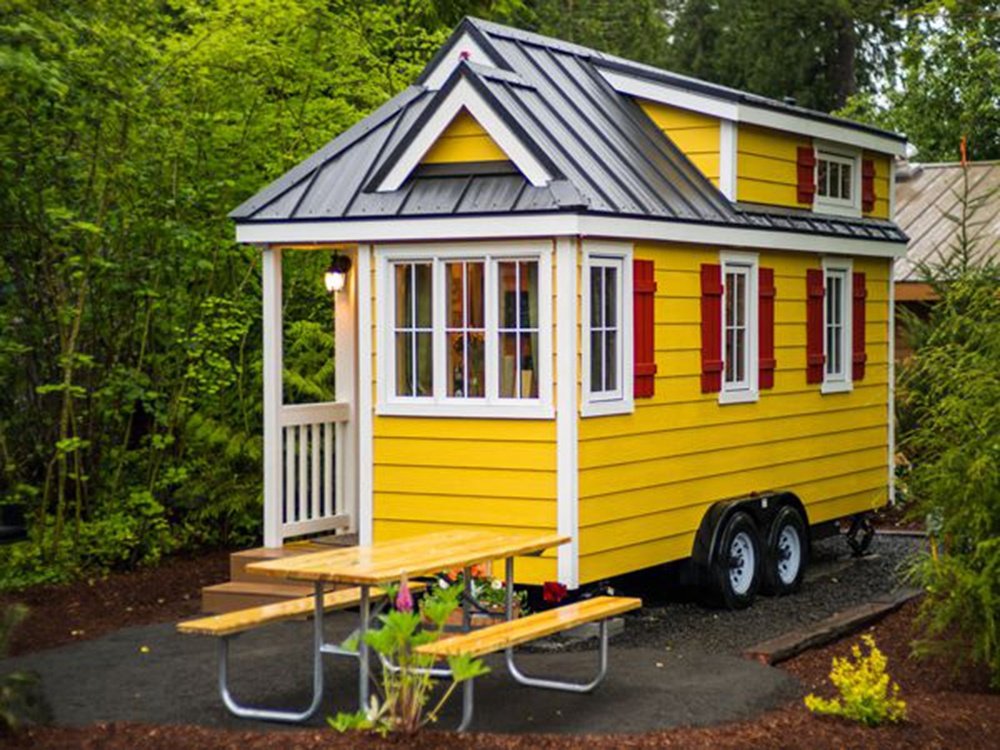
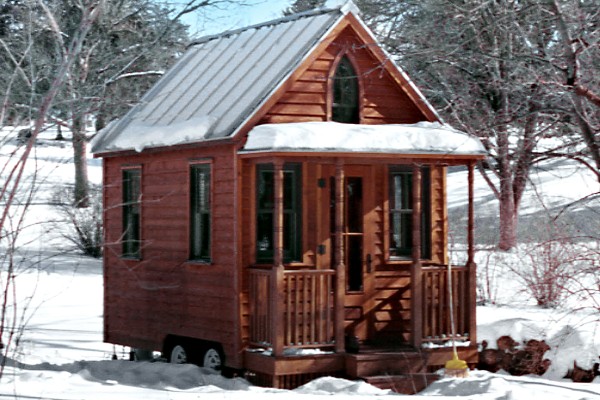
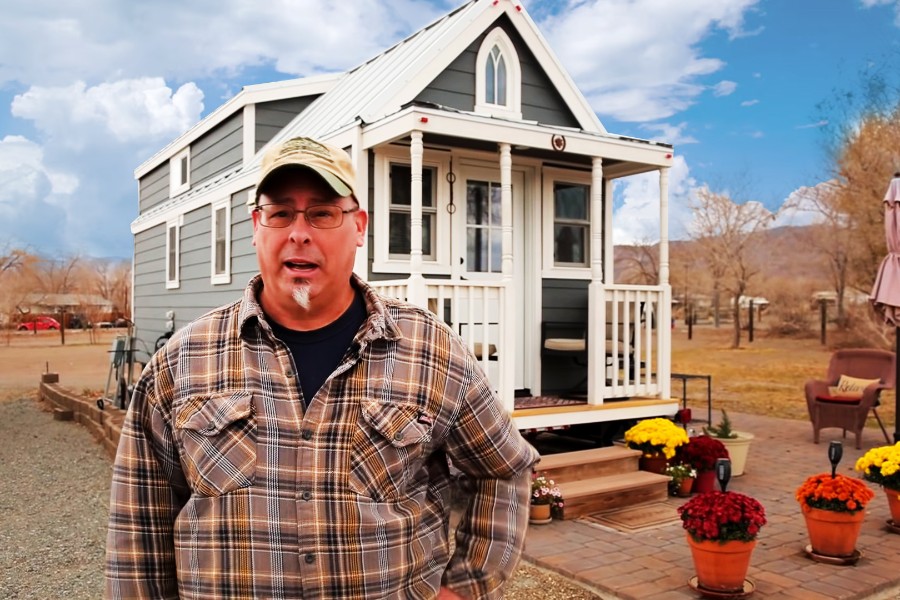
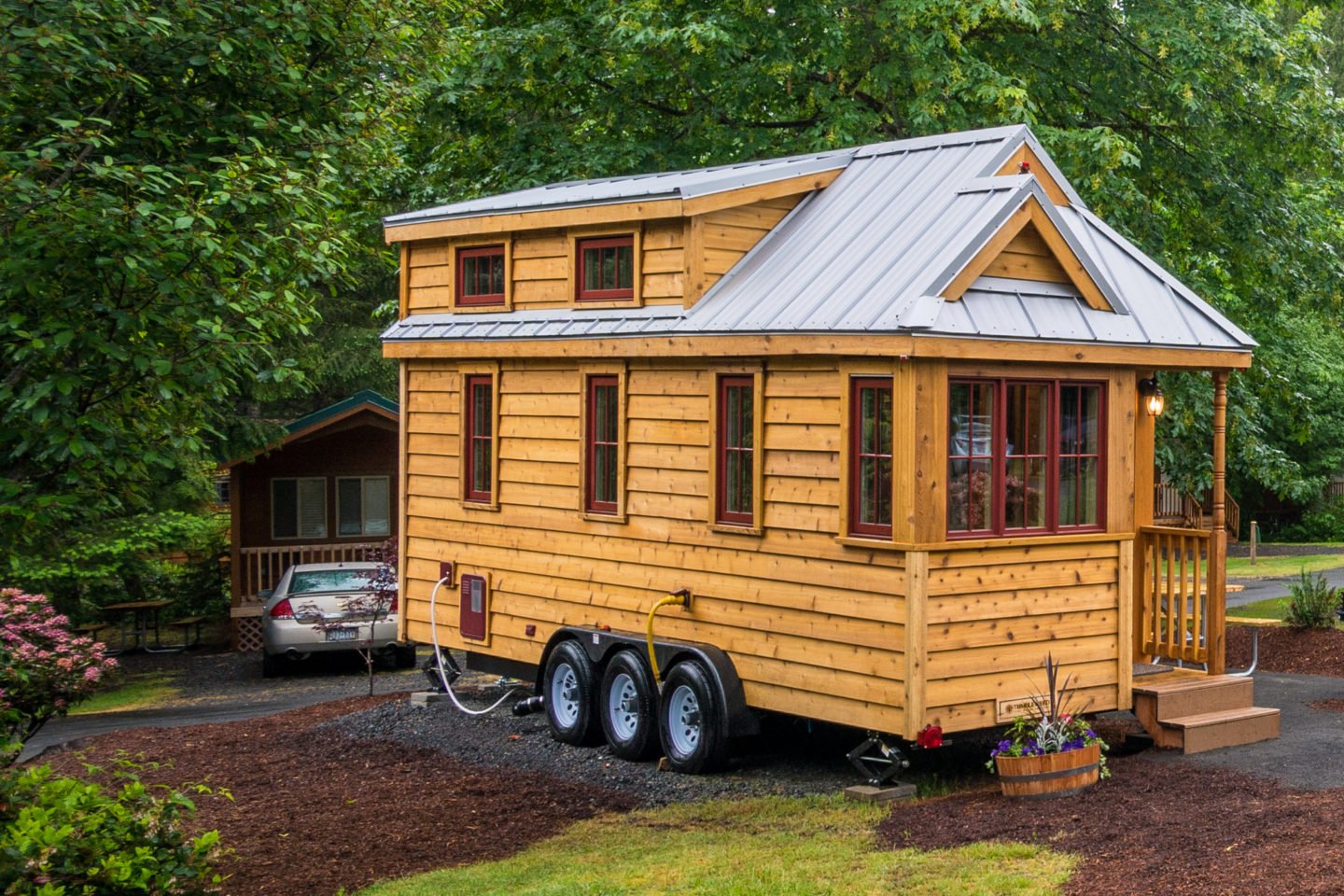
With wheels, traditional proportioning and archetypal form, these little structures are designed to be portable and can, essentially, be sited anywhere you can park a travel trailer.* They range from about 50 to 130 sq ft. Purchase yours ready-made or buy the plans to build it yourself. These homes are stationary designs built as a main house or guest house. Most of the plans have an optional extra bedroom in back. The house sizes range from 261 sq ft up to 874 sq ft. We do not build the Cottages. They are designed to be built on site with a local contractor of your choosing. Tumbleweed Tiny Houses Company Steve Weissmann steve@tumbleweedhouses.com
15 West MacArthur St 95476 Sonoma California United States
Tumbleweed Tiny Houses Logo

Building the Fencl

Over the spring of 2009 we built our largest home on wheels, the Fencl. This small house is 130 square feet and features a kitchen, bathroom, sleeping loft, fireplace and much more.

How long did it take to build?

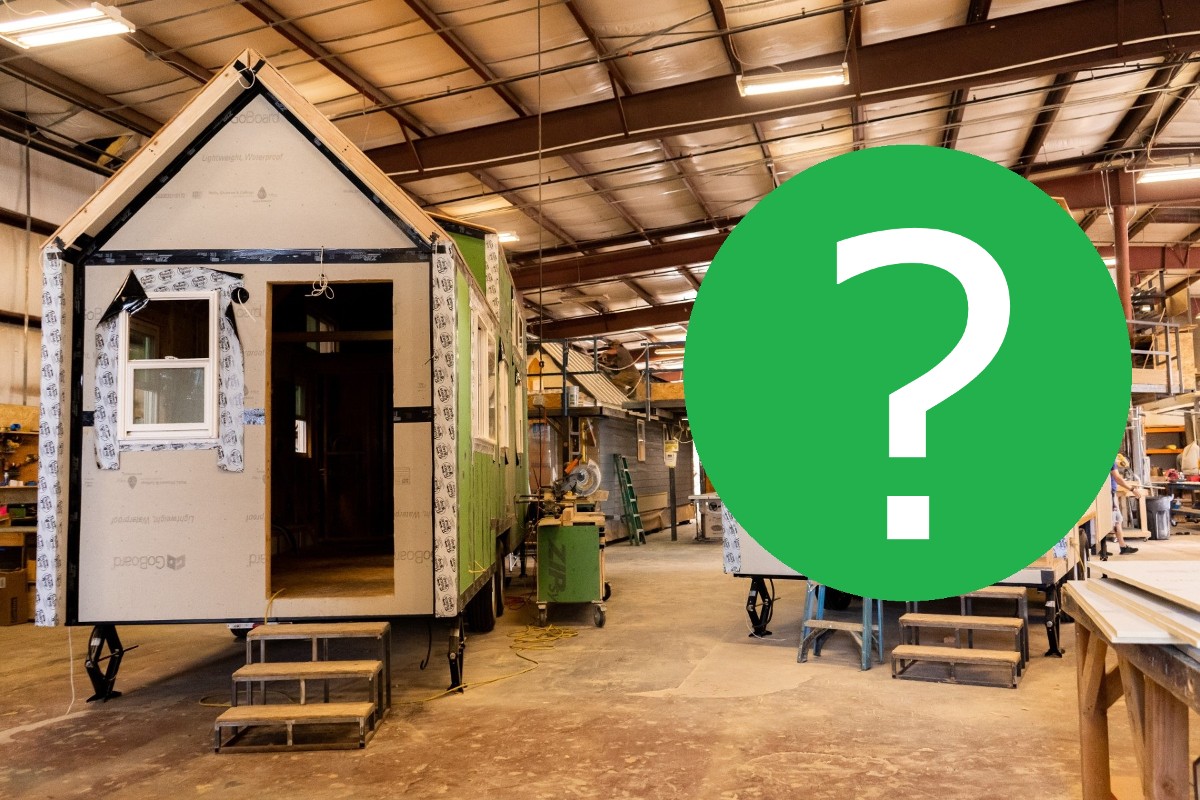
A crew 4 built this house over 10 weeks. We spent 825 hours to purchase materials and build this green design house.

How much did it cost to build?

When all was said and done we spent $19,148. We shopped around and shaved almost $2,000 from the cost when he found a trailer 100 miles away at a much lower cost.

Build one myself?

Depending on your skill level and determination it is possible to build a mobile home for a fraction of the cost of buying on already built. We do recommend hiring licensed contractors for the plumbing and electric work. When we build a house we hire specialist for those tasks. Typically, the electrician and plumber are the highest paid people per hour, so we keep the amount of their work limited to just those two areas. We spent less than $2000 to have that work completed on the Fencl. When we build a small house we usually hire a finish carpenter as the job foreman. We keep the number of workers at any given time to 2 or 3. Aside from the finish carpenter and electrician and plumber, the other crew doesn't need as much experience.


Buy this house from Tumbleweed?

This green home can be purchased for $53,997 plus shipping and applicable tax.

Is the price negotiable?

We price our homes and home plans with a very low markup. We do not leave room in our pricing for a discount. Our expenses are subsidized by selling ad space on our website and by the sale of our books. We are proud of the fact that we pay our crew a fair US wage with insurance.

Written by Steve Weissmann — January 26, 2010

Filed under: Build it yourself  

Inside Ben and Sabrina's Enesti

In 2008, Ben and Sabrina built a modified version of the Enesti. Take a look inside.

Written by Steve Weissmann — January 25, 2010

Filed under: Houses  

Year in Review: 2009

I thought it would be fun to have an annual journal of the tiny house business. I've chosen to write about the business side because that is my focus at Tumbleweed. Our little company has 2 employees: Jay the founder and designer, and myself, Steve, the business and tech guy. At the onset of 2009 my plan was to focus the majority of my attention on Tumbleweed. Ever since turning 30, I’ve been a serial entrepreneur. Before joining Tumbleweed, I was a restaurateur and real estate investor.

Sometimes life has other plans for us, and 2009 was just that. Unfortunately for me, I had a perfect storm of problems in 2009 which thwarted my plans to develop Tumbleweed in the way I wanted to. I found myself embroiled in four different lawsuits that stemmed from my father's passing. It was stressful, costly, and wreaked havoc on my life. My restaurant business took a tremendous amount of my time in the down economy as well.

Needless to say, my plans for Tumbleweed did not come to fruition in 2009. The first half of the year we focused on our new book, a re-write of Jay's older book under the same title, "The Small House Book." Jay did an amazing job on his new book, and the final result was a beautiful book that was 196 pages. It was completed on the 11th hour, and we printed 1,000 copies.

This was our first foray into serious book publishing. In the past, we had done runs of 1,000 books at a time, but our older books were much smaller, simpler, and far less expensive. When the books were completed, about 40 copies went out, and we immediately got complaints that the pages were falling out. Our printer apologized for using the wrong type of glue on some of the books and promised to fix the problem in just a few days. They also agreed to ship any books we sold during that time for free. A few days quickly became weeks, and they stopped shipping our orders without telling us. They also continued to ship the bad books without fixing the binding. It was such a mess, that it took six months to finally settle the bill.

Our first run sold out very quickly, and we have since found a new vendor. The second run went okay, but it too had its share of problems.

The website stayed pretty static, and none of my plans to reorganize the site found the time. Our website had become "bloated" and difficult to navigate. It is something I really wanted to fix in 2009, but will have to fix in 2010.

Early in 2009, I read a book called "Landing Page Optimization". If anyone is really serious about running a web based business, then you must learn the importance of conversion testing. For years we've been able to grow our website traffic, but I never much considered the effectiveness of the words and pictures on a page - until I read that book. I spent what little free time I had on that subject, and the few areas I did focus on showed tremendous results. Most tests I did had practically no effect, but about 1 in 10 changes made a HUGE impact. I'm an avid reader of business books, and all told I probably read about 10 books on web based businesses this year. The net result was that I made a few minor changes that had dramatic results.

Building the Fencl

This year we decided to build our first mobile home, and it would be the Fencl. The Fencl design came about because it was clear we had a large number of customers interested in a small house that combined the Weebee and the Tarleton. Our plan was to build the house, take it on tour across the country, and sell it on the East Coast.We choose the East Coast as our final destination because many people had expressed interest in buying the house on the East Coast.

In the past, when we built houses, we hired a contractor and agreed on a fixed price. This time, we decided to hire the crew ourselves and pay an hourly rate. The net result was a financial loss, as the wages exceeded budget.

The final product was a beautiful green home ready to tour the country. At the time, I was overwhelmed with my other job, and I hired a publicist at the last minute to help me promote the upcoming tour. I wasn’t able to spend the time necessary, and the house went across the US without much fanfare. Accordingly, without the media exposure, it was hard to sell the house.

Currently, the small house is available for sale in Ohio, and you can tour it 7 days per week.

The year ahead

We have some big plans for the coming year. Realistically, most of the projects we are working on now won't come to our website until 2011. Keep an eye out for more posts about the road ahead - it is something I plan to blog about. I'll be reaching out for partnership opportunities in the coming year, and I'll be using our newsletter and LinkedIn to do so. View Steve Weissmann's profile on LinkedIn Go back in time: 2008

Written by Steve Weissmann — January 06, 2010

Filed under: Business  

Salvaged RV into a Tiny House

damaged-rv-trailer

Salvaging an old or destroyed RV trailer can be a great way to furnish your tiny house. Many salvageable items can be claimed from an old trailer to be used again in a tiny house on wheels.

The above photo shows a 32 foot trailer that was listed in Kentucky for $600. The side was ripped off but the owner still had the sink, tub and other appliances available that were included in the purchase. Watch your local craigslist for bargains like these or check around your town, you may find someone who would be happy for you to take it, just to get it out of their way.

The base trailer was not damaged so the the outer shell could be completely removed and you would than have a 32 foot trailer to build your tiny house on. You could than salvage all the internal items, such as the electrical control system, plumbing and water supply. Re-use the furniture and cabinets and incorporate the kitchen appliances and bathroom toilet and tub into your tiny house.

What is not salvageable you could take to the dump or donate to a local charity organization. Below are a list of three things that you should consider as options when using an old RV.

  1. RV components are designed to withstand trailering long distances, are made to be turned off for many months, so they are very durable.
  2. Most RV’s utilize 12 volt direct current systems or DC electricity, so generally use 12 volt appliances. However they usually have an inverter for when they are plugged into a grid which converts everything back to AC usage. Most inverters will transfer back and forth automatically.
  3. Many RV’s have portable gas stoves that can be moved in and out of your home. Many of the new bathrooms are one peace and incorporate everything in them form tub to toilet, so this can make setting up your new space a relatively easy process.

So keep your eyes open at your local craigslist and ebay for a great deal and you may find that you will have just about all the items you need for furnishing your tiny home. by Kent Griswold

trotwood-kitchen

rv-stove

Written by Kent Griswold — October 30, 2009

Filed under: Build it yourself  

Off-Grid Power Station

powerstation1

In the previous two posts we discussed a couple of off-grid options. Wind and Solar and how they can generate power for your tiny home.

For both these power sources you need a place to store and distribute the power. In this article I will show you a basic power station set up to run a tiny house on a part time basis.

This unit consists of a box that contains all of your storage requirements. Propane to fuel your stove and hot water heater and batteries and inverter to power your electrical needs.

powerbox-assembly

Here is the basic box under construction. Built with three compartments. The right one holds your propane bottle.

The top left is for your inverter and meters and wiring. The bottom left holds two batteries for your storage which is generated from either your solar or wind power or both if you are set up that way.

wiring

The next photo shows the inverter and the wiring involved with the setup. One cord coming up from the batteries and the second one going into the inverter to convert the electricity to the right output.

meter

In the following photograph you see the meter that lets you know the status of your charge, etc. battery-connection

The next photo shows the connections to the battery and the wiring going up to the inverter.

batteries

Following are the two batteries that power this unit. This power station is set up as a camping unit which is mainly used on weekends so two batteries are sufficient. If you are living in your home full time more batteries may be required to fill your needs.

This photo shows the completed unit with the exterior wiring and switches and adaptors for bringing in the power and also using it externally.

This article is not a how to article but an illustration of a power station set up. You should consult a professional in setting up your home power unit so that it is done the right way and you can sleep peacefully knowing that your power unit is working properly.

Written by Kent Griswold (Tiny House Blog)

sideview-powerbox

Written by Kent Griswold — October 19, 2009

Filed under: Build it yourself   energy efficient home   solar home  

House To Go

xs epu weebee
lusby tarleton walden
fencl popomo

Recent Posts

Categories

Recent Comments