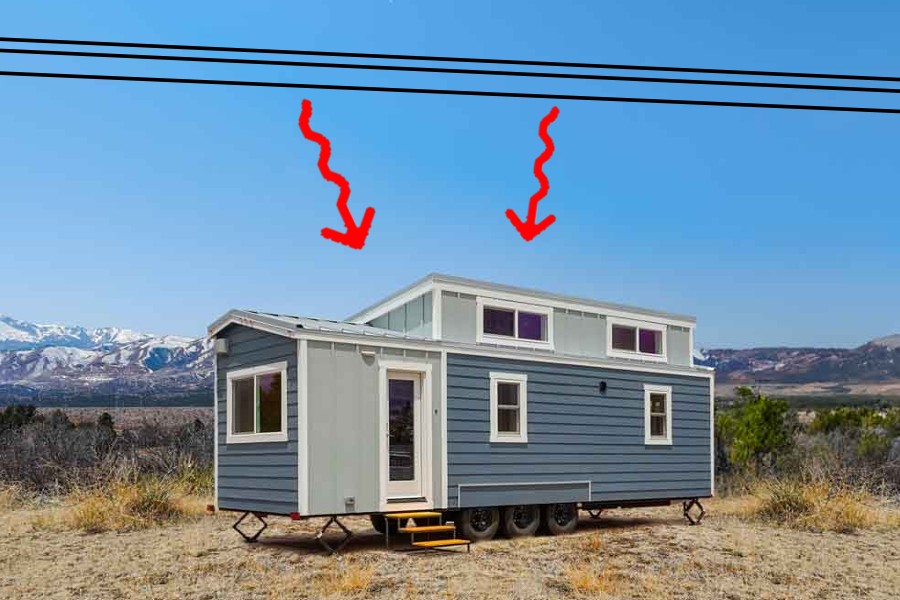
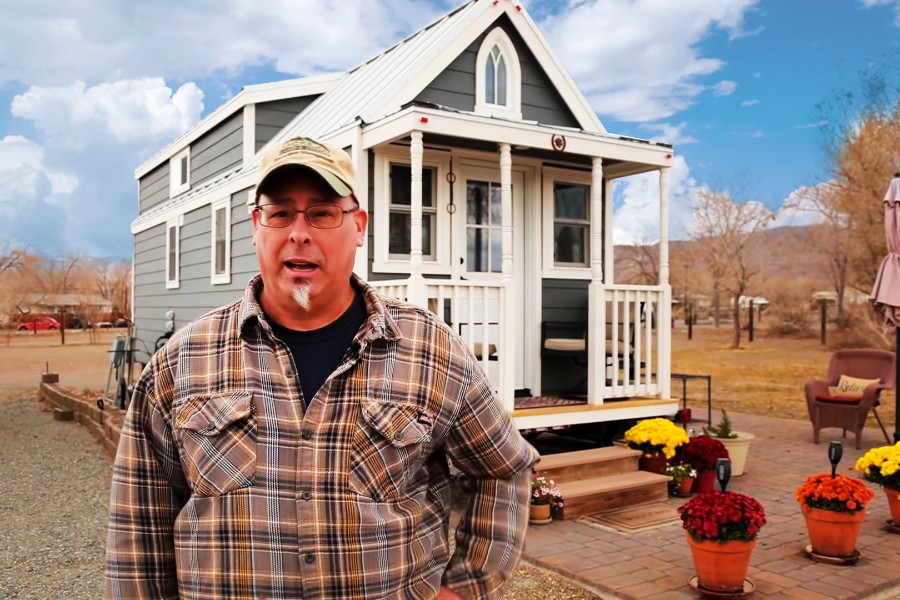
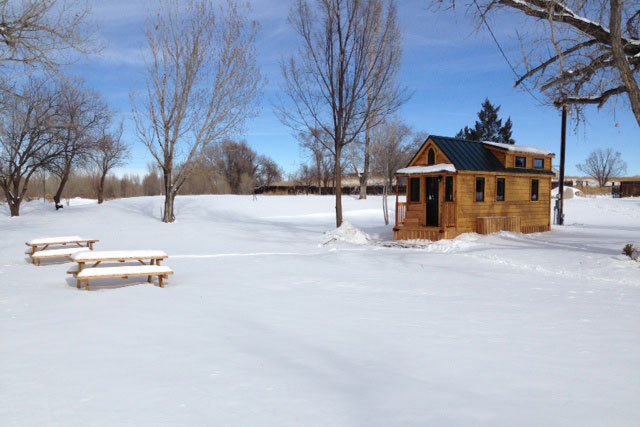
http://www.tumbleweedhouses.comWith wheels, traditional proportioning and archetypal form, these little structures are designed to be portable and can, essentially, be sited anywhere you can park a travel trailer.* They range from about 50 to 130 sq ft. Purchase yours ready-made or buy the plans to build it yourself. These homes are stationary designs built as a main house or guest house. Most of the plans have an optional extra bedroom in back. The house sizes range from 261 sq ft up to 874 sq ft. We do not build the Cottages. They are designed to be built on site with a local contractor of your choosing.Tumbleweed Tiny Houses CompanySteve Weissmannsteve@tumbleweedhouses.com
15 West MacArthur St95476SonomaCaliforniaUnited States
Ryan Mitchell of The Tiny Life website has been keeping us posted about his exciting plans for a modified Fencl. In addition for guest writing for Tumbleweed, Ryan has been blogging about simple living, tiny houses, and environmentally responsible lifestyles on his website: we think he's awesome!
Like many of you, I have a lot on my plate. So when it came time to build my tiny house,
I started to wonder when I’d fit it time in to actually finish my house. Right now I am juggling three jobs, running
my blog over at The Tiny Life, writing a book and on top of it, building this
Tiny House. For many of you, children
are part of the equation, but there are plenty of people building homes with
kids. So the question in your mind right
now might be: how can I juggle everything in my life and build a tiny
house?
Making time
The answer is actually part of what I call The Tiny Life;
building a tiny house isn’t fix-all cure that some wish to believe. In fact, in some regards building a tiny
house is the simple part. In a way it
plays into our consumer culture, why go out and buy something in an attempt to
fix something. It is the lifestyle that
many find difficult to adopt. We all
know you have to reduce the amount of stuff we have, but along with the small
house and the sparse possessions we must bring focus to the life we wish to
live in that house.
It was at the point where I had decided to build my house
that I sat down and wrote what was truly important to me, these were things
that I felt were worthy of my time. From
there I ordered them in terms of importance.
It was this list that I then took and considered where I spend my energy
and time.
Through this process I realized that some things simply
couldn’t be achieved right now because other things were more important to me;
it meant that I had to say no to some things, which isn’t a word often in our
vocabulary in modern society. It was
surprising to see how things that were a lower priority for me seemed to sneak
into time that would be better used for more important things.
So take a few moments, even if it is on the back of a
napkin on a coffee break, to write down your top 10 things that are most
important to you and then consider how a shift if your time and energy might be
needed. With this you will have to learn
to say no to various activities. In this
list you can begin to see where building your Tiny House will fit in and what
things have to go in order to make the time.
You might find that building your house is lower on the list, which
means it will take a few years to complete, and that is okay because you are
intentional about it. In the long run
you are able to focus on what is truly important in your life and begin living
The Tiny Life.
Katie Butterfield recently graduated from UC Merced with a degree in political science. While finishing her degree, she discovered her passion for sustainability. She also loves food! These two passions led her to create her own blog about the food movement. Her goal is to educate people about the problems in our current food system and give examples of how to make it more sustainable- check out her awesome recipe tips!
I learned to cook in a large kitchen with ample counter
space, multiple ovens, and perhaps the largest, fully stocked pantry you've
ever seen. When I went to college, this
changed dramatically. First I lived in
the dorms, then in a house with six people sharing a kitchen. Now my husband and I live in an apartment
with a limited kitchen.
We have found that the best way to make cooking dinner easy
is to perfect the base meal that we cook. By base meal I mean that one dish
that we make whenever we just can't think of anything else to cook. Changing our base meal to fresh vegetables
and rice was not only beneficial for the size of our kitchen, it was also a
step toward eating more sustainably. We
found that it is simple and quick to make and turns out a little different
every time because we use different vegetables and sauces.
Rice and Veggies:
Cook some
rice (we use about ½ Cup of dry rice per person). Follow the directions that came with your
rice to make sure that it cooks properly.
Different types of rice have different cooking times. We use a rice
cooker because we make this meal so often.
Next chop
up your vegetables and sauté them in a pan with a little oil and a pinch of
salt.
Serve
vegetables over rice with salt, soy sauce, or other sauce.
Often we eat this with cheese sauce. Changing the sauce is another way to make
this simple meal different every time.
My husband and I both love peanut butter, so we have created a peanut
butter cheese sauce. If you'd like to
get creative with this meal and you like peanut butter, here is the
recipe.
Peanut Butter Cheese Sauce:
1/2 Cup
peanut butter
1/2 Cup
warm water
pinch of
salt
hot sauce
to taste (optional)
1 Tbl.
Honey (optional)
3 thick
slices of cheese (we like cheddar best), cut into small cubes
In a bowl,
whisk together the peanut butter, water, salt, hot sauce, and honey.
Once fully combined, the mixture should be smooth. Transfer to a small pot and place on medium
high heat on the stovetop. Once the
mixture is simmering, mix in the cheese, stirring constantly.
When all of the cheese is melted, pour this sauce over your
rice and veggies and enjoy!
I don't know too many people who have been brave enough to
try this, so if you are one of them, don't worry! You can make this with out
the cheese and have a nice Asian-style peanut sauce.
Or make your own wacky sauce, or normal sauce if you prefer. It is important that you cook food that you
like the taste of so that you want to keep cooking- no reason living in a tiny house should make this difficult! Get creative and find something that you
love!
Tumbleweed and Southern Adventist
University - Partners in Education
Tumbleweed and Southern Adventist
University are introducing the concept of tiny home construction to
the next generation of American contractors. In the spring of 2013
students in SAU’s Construction Management program will be building
Tumbleweed’s newest model.
As you can see from our early drawings of the new house on the left, The new Tumbleweed is going to include a full sized murphy bed with built in couch on the first floor.
Tumbleweed’s focus on education is
longstanding. Through workshops, books, open houses, partnerships
with high schools and community events we are trying to change the
perception of what is possible. We are thrilled to be working with a
community of future builders that have the ability to change the way
America lives, literally, in the palms of their hands.
I
recently had the opportunity to sit down with two of the Tumbleweed
staff involved in developing the partnership with Southern Adventist.
The first thing I wanted to know was why they felt it was necessary
for the next generation contractors to understand the concept of tiny
homes.
Pepper
Clark, a Tumbleweed workshop presenter, was nothing less than
enthusiastic in her response. “It's essential for the next
generation of American contractors to understand the idea
of tiny homes because they provide both the most logical response to
our growing economic and logistical housing challenges.
Future builders need to be aware of how many problems can be solved
with a tiny house; providing means for multi generational families to
live happily together, allowing people to work at careers they love
instead of high paying jobs they hate, enabling folks to move their
homes as needed to respond to changes in their lives, and giving
young people a way to live independently with little overhead as they
start out.”
Paul
Farr, head of business development and sales, also sees contractors
as an integral component to solving America’s housing and financial
crisis. “American
contractors have the opportunity to help Americans with the financial
headache of getting into home ownership. When contractors assist
people in getting a better financial foundation under their feet, it
will be assisting future generations. We want to refill the building
pipeline in a healthy and sustainable way!”
When
asked about Tumbleweed’s focus on education Paul discussed the
importance of homeowner awareness and creating a financially
sustainable lifestyle. “If
we can assist people in making the decision to live in a tiny way, to
reduce financial stress and increase financial stability in the
average home, we will have been successful. Many people are having a
hard time making ends meet. It is a path to less stress and financial
stability.”
Southern
Adventist University is pioneering a new and more responsible
approach to educating the next generation of American builders.
Tumbleweed is looking forward to the day when the concepts involved
in tiny space design and construction are standard components of all
university level construction programs.
Our home is our sanctuary for rest and pleasure, and its design is most likely a reflection of our lifestyle and personality. If the look of your home hasn't changed for decades, you may be stuck in a rut. Do you play it safe with neutral colors and low-key decor? Perhaps you're the type of person who prefers to stay within a comfort zone. Invite excitement and unpredictability into your life by starting with some home improvements and design updates. Similar to our wardrobe and hobbies, updating our home can have a positive effect on our mental, emotional and spiritual health.
Take risks and stay fresh by adopting any of the following interior-design ideas:
Eye-Catching Color
Transforming the energy of your home doesn't have to be an expensive renovation project, and your walls don't have to be the only source of bright and stylish color. Accent a subdued wall with bold and colorful accents. Grommet curtains in colors jonquil, azalea or currant add character to white or beige walls. You can also play up your drapery with fun patterns and prints. Home decor store Z Gallerie offers Venetian Blue and Citrus Grey panels in a variety of geometric shapes that create a contemporary appearance. Minor room accents in bold hues can also instantly and easily give a home personality. Pair couches, sofas and sitting chairs with throw pillows in an orange geometric pattern or grey, orange and turquoise contemporary print available on Etsy.com.
Opposites Attract
Unexpected design choices and pairings can create an interior space that's anything but ordinary. Live life outside the rules and make life more interesting by marrying two unlikely design elements into a contrasting, yet stunning interior-design theme. Envision a modernistic style with retro accents. Pair antique furnishings with luxury furniture. Imagine an elegant design theme decorated with DIY crafts.
MiamiHerald.com recommends the design advice of Emily Chalmers, author of "Contemporary Country" and "Modern Vintage Style." In "Modern Vintage Style," Chalmers is an advocate of mixing old and new elements as well as looking for opportunities to "restore, reinvent and rescue."
As you juxtapose design contrasts, strive for balance. Chalmers suggests using artifacts and old-fashion pieces in conjunction with more modern and refined elements. Light fixtures and textiles are excellent options for adding dimension to the design of a room. From mid-century modern floor lamps and Victorian wall sconces to Oriental floor rugs and elaborate tablecloths, a wide variety of lighting and textile options can serve as excellent contrasting design accessories.
Natural Instincts
Home remodeling and design platform Houzz.com suggests designing your home by following your heart and speaking to your soul. Most importantly, don't be afraid to execute a design theme or decorative idea because it's too outrageous or eccentric. Design theme rooms to reflect your interests and passions. Are you a sentimental person? Create a nostalgic room adorned with family photos, achievements and heirlooms. Do you enjoy the tranquility of being at the beach? Transform a special space into a beachy nook with picturesque outdoor wall art and sea-inspired ornaments. With a little introspection, you can explore your inner creativity and then approach your interior space as a blank canvas for personal, aesthetic self-expression.
As of December, Pepper Clark of Bungalow to Go has accepted a full time job at Tumbleweed, and she’s now spending her days at the Sonoma office working hand in hand with the team to make fabulous things happen. Here’s what she has to say about this new development:
A month ago I would never have imagined I would step away from my own business to take a "regular job" again, but the three most important things to me about working independently are that I get to be exactly who I am (no pantyhose and high heels for me!), I get to make business decisions based not only on the bottom line but also on their emotional and environmental impact, and I get a lot of fulfillment out of the level of creativity and autonomy it gives me. The miraculous thing about working here is that I still get to cover all three of those bases while working cooperatively with a talented group of people who have similar perspectives and priorities.
Hi Pepper!
After the two workshops I presented last year I kept in touch with the Tumbleweed folks. I know from everything we've shared that the highest calling for the whole team is to make the tiny house dream attainable for everyone who wants to grab it. To do that, a certain amount of sustainable growth is called for. When they felt ready to grow and hire some more people, I was flattered to find that I was at the top of their list of people to bring in full time. For now I'm providing building and design consultations and customer support while preparing for presenting workshops again in spring.
We're working together on revamping the workshop format to create the best possible experience based on years of feedback from our audiences. We're very excited about adding more opportunity for tiny house fans to connect socially with each other, and putting in some hands on elements for workshops coming up in 2013.
As for Bungalow to Go, we've decided the way to go forward is to combine forces with Tumbleweed. For now, my partner and the crew will continue to work the same way they always have, with my input gradually being replaced with their efforts. When Tumbleweed customers have a need for a customized or fully custom build in our region, Bungalow to Go will get that project.
Overall, I view the changes in Tumbleweed as nothing but positive. We’re growing so that we'll be able to do what we've been doing, but more so- helping people fulfill their tiny house dreams through education,inspiration, and simply amazing support and research. Over the past years with very little "manpower" we've been limited on what we could do to bring the wealth of our knowledge out to everyone, but that's going to change soon.
Welcome Pepper, and we look forward to working together to expand the horizon of possibilities for all the many people who want to think big and live tiny!