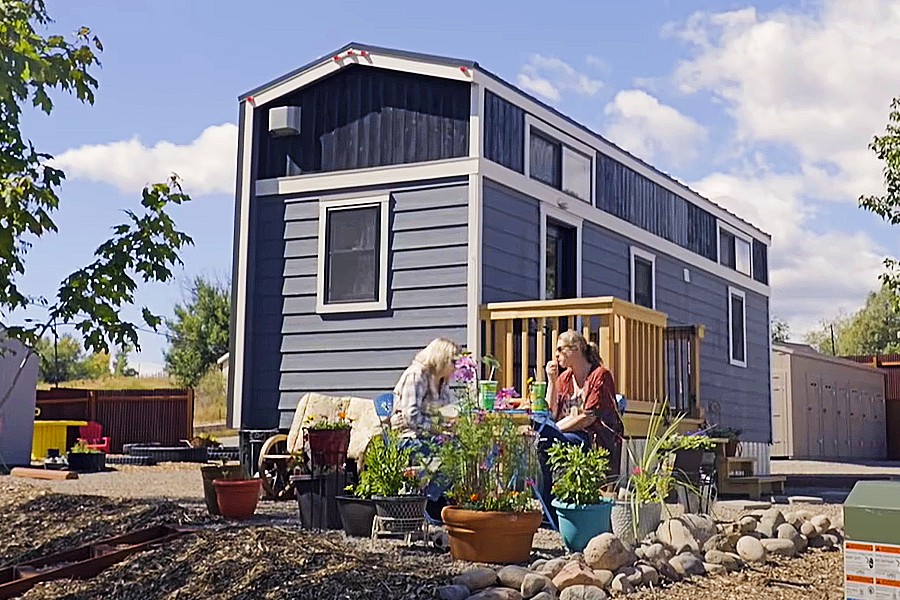
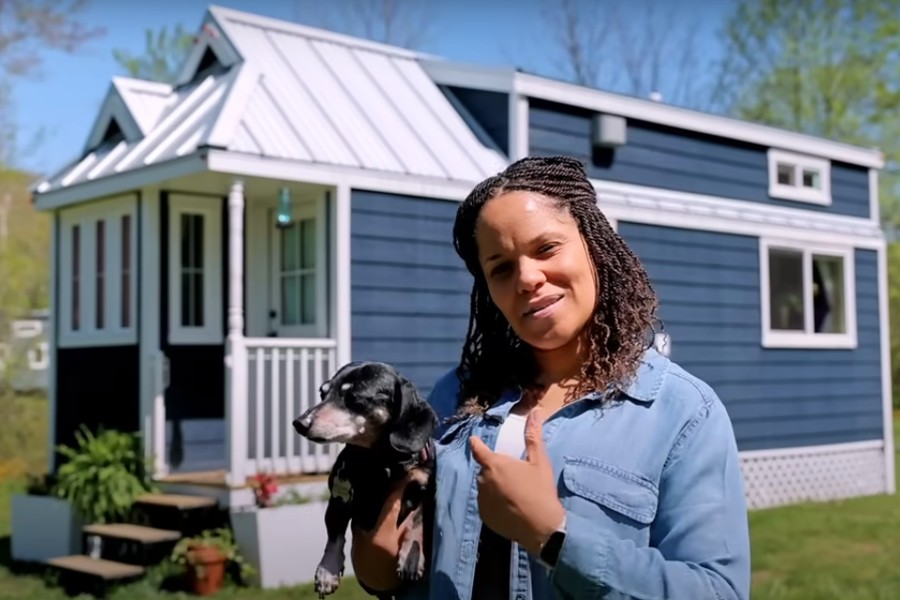
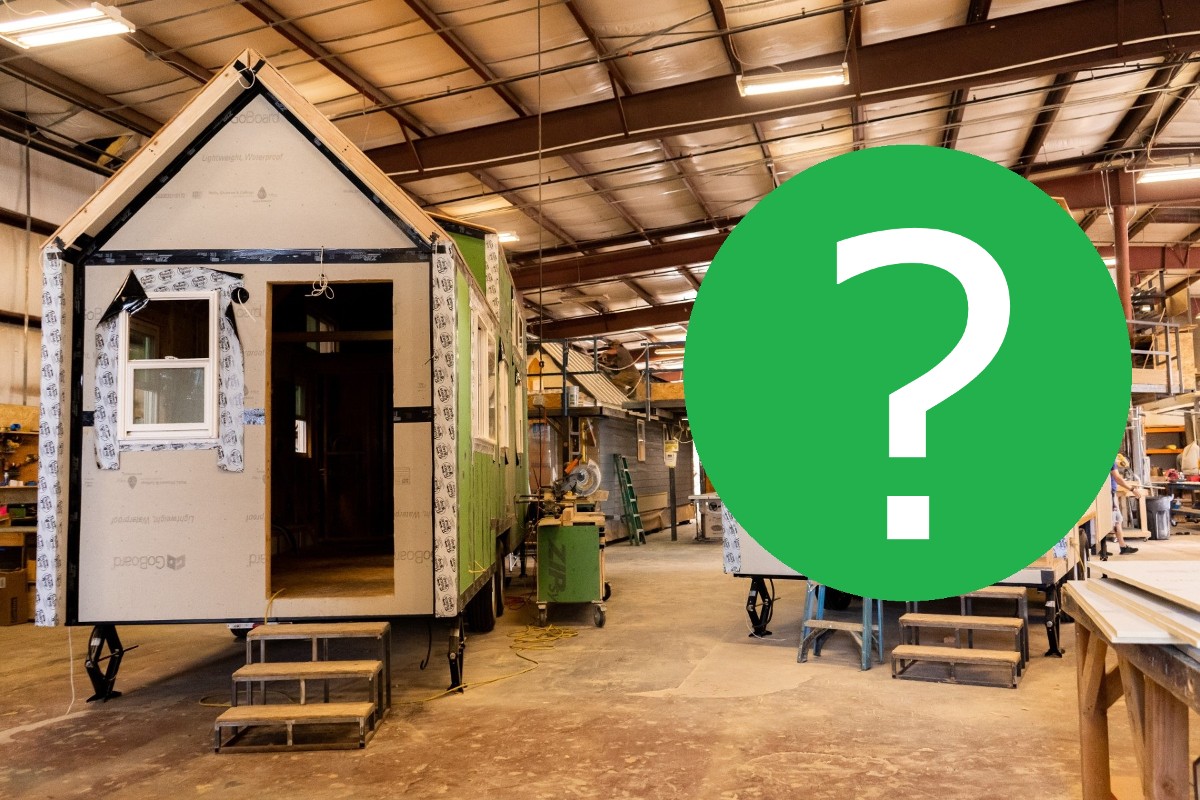
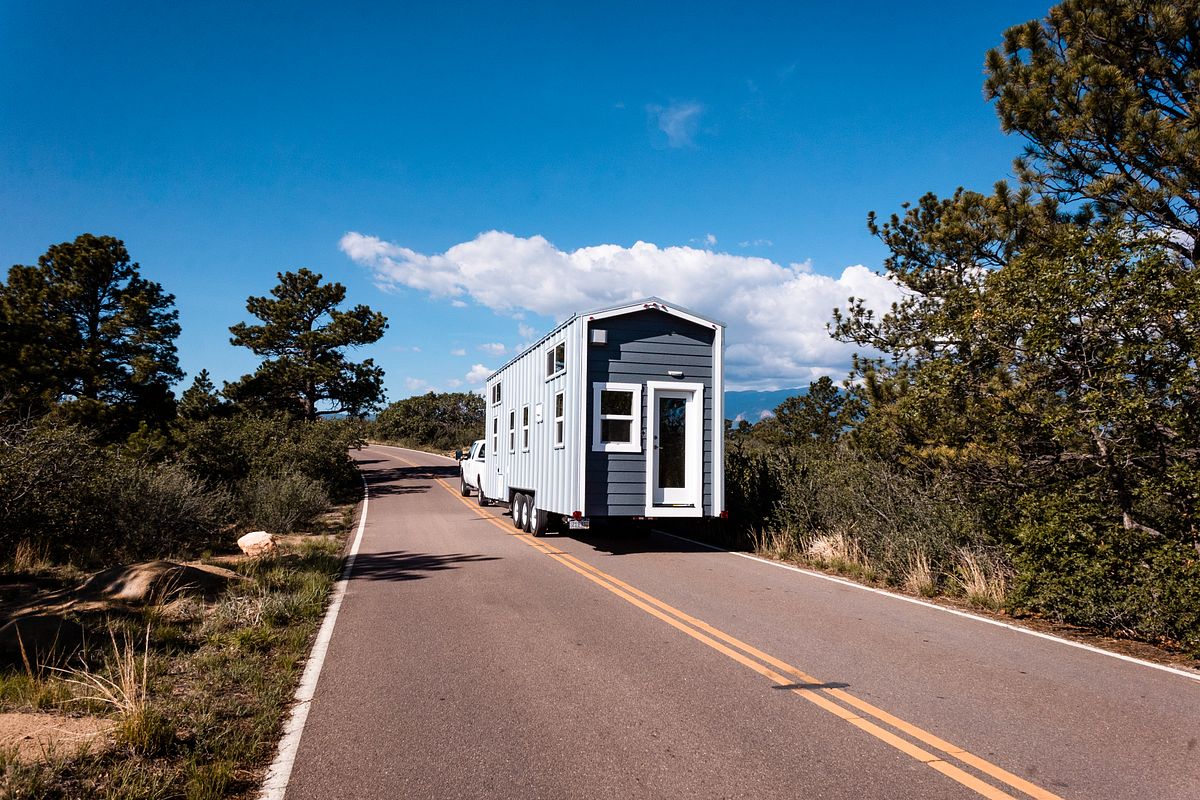
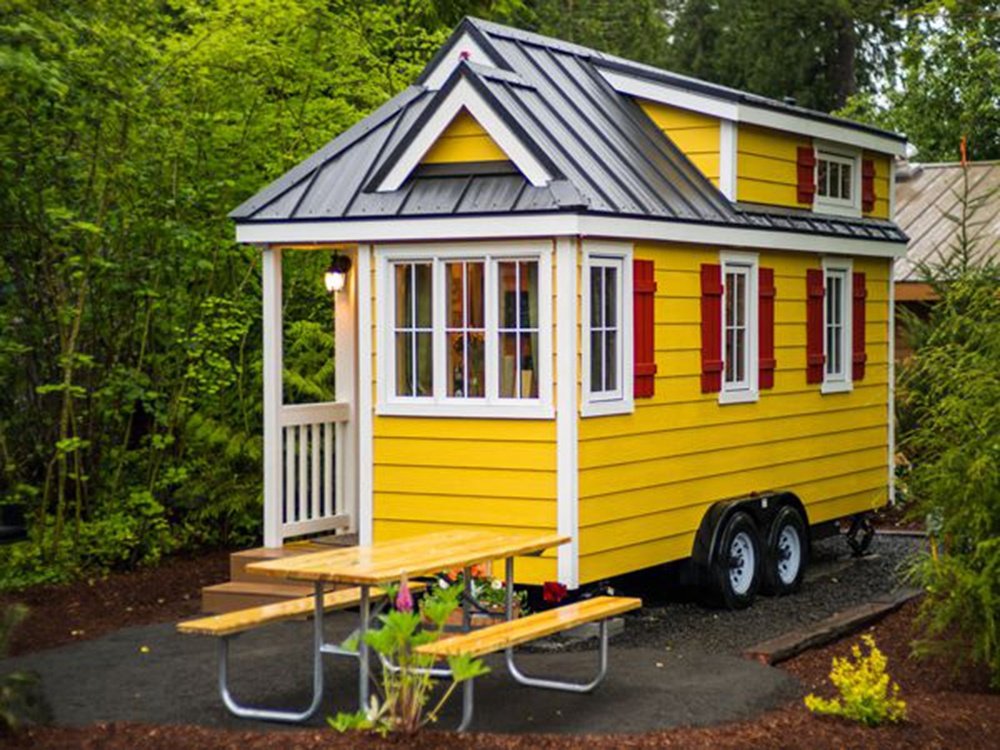
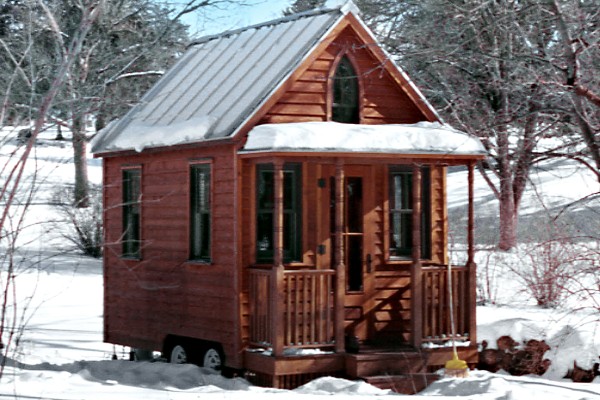
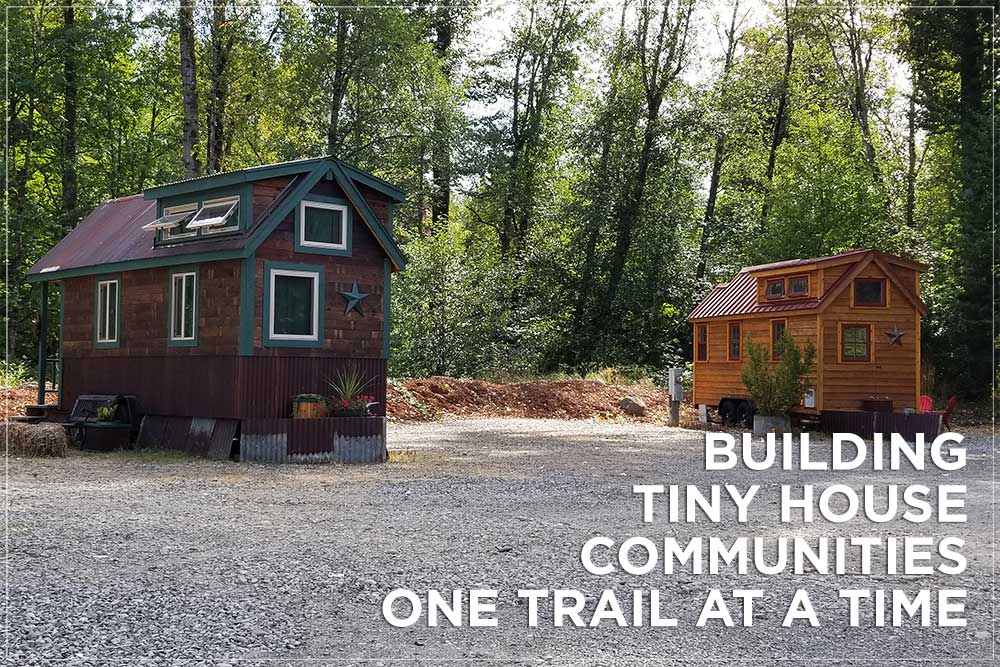
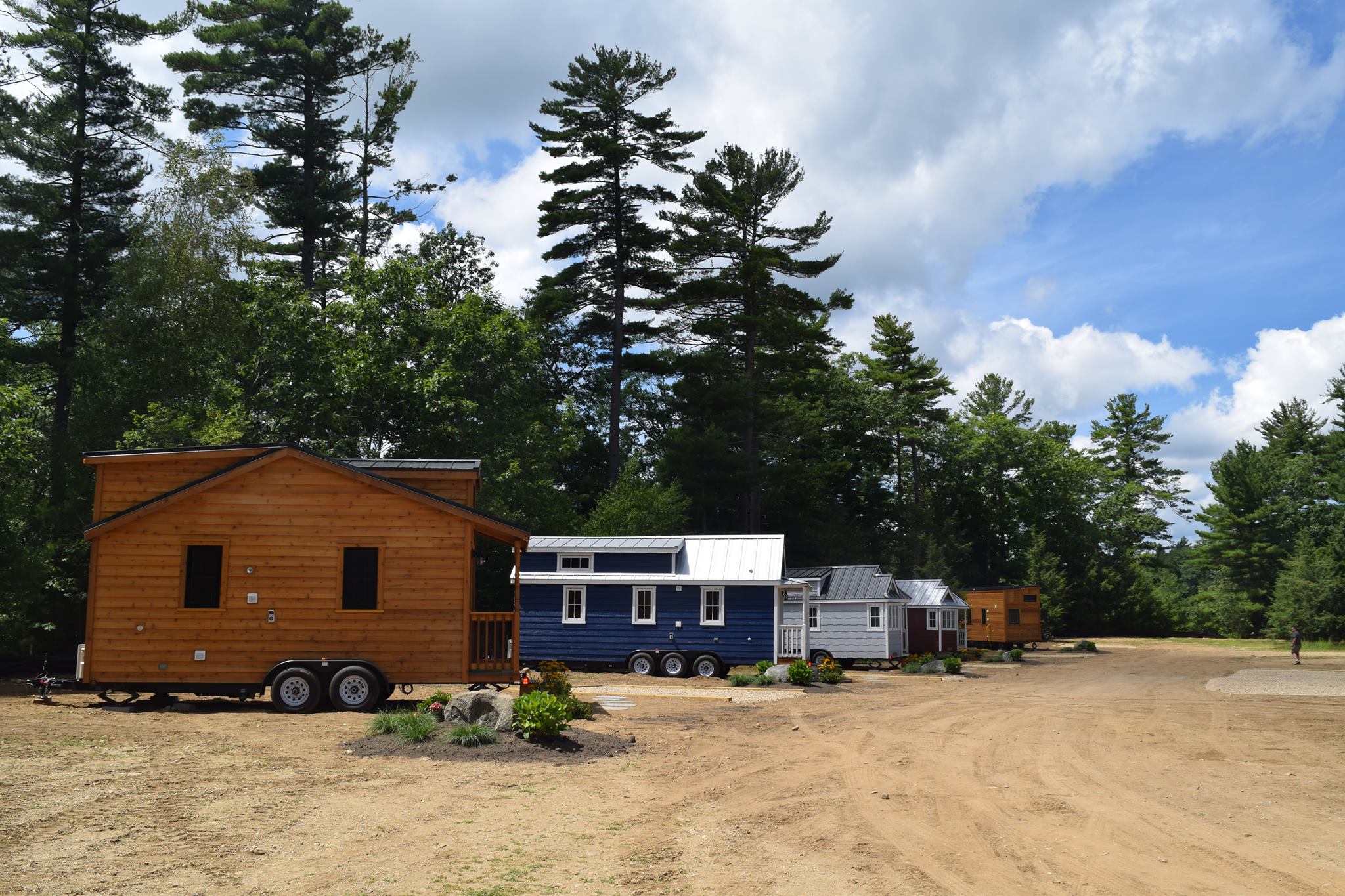
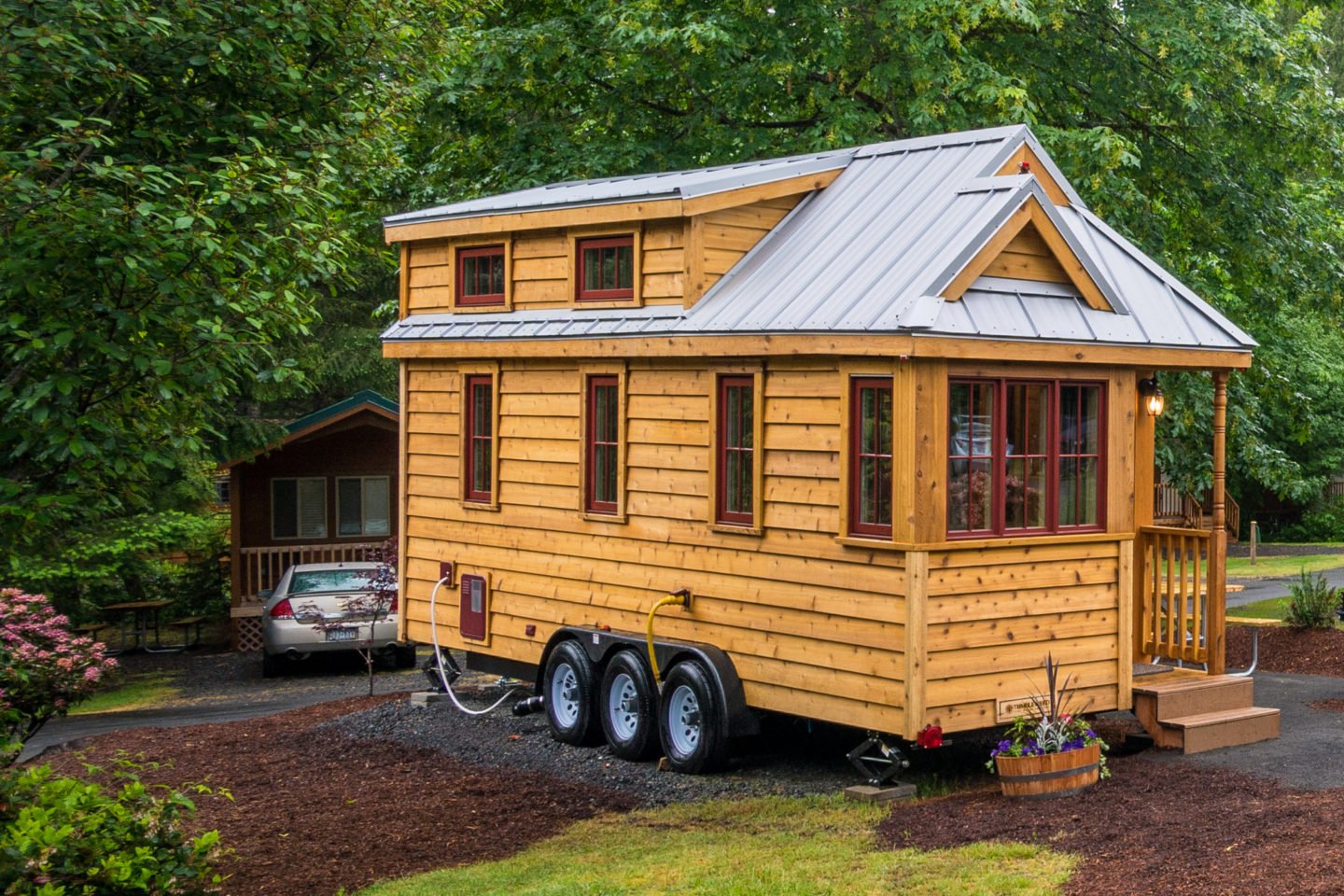
http://www.tumbleweedhouses.comWith wheels, traditional proportioning and archetypal form, these little structures are designed to be portable and can, essentially, be sited anywhere you can park a travel trailer.* They range from about 50 to 130 sq ft. Purchase yours ready-made or buy the plans to build it yourself. These homes are stationary designs built as a main house or guest house. Most of the plans have an optional extra bedroom in back. The house sizes range from 261 sq ft up to 874 sq ft. We do not build the Cottages. They are designed to be built on site with a local contractor of your choosing.Tumbleweed Tiny Houses CompanySteve Weissmannsteve@tumbleweedhouses.com
15 West MacArthur St95476SonomaCaliforniaUnited States
Ryan Mitchell of The Tiny Life website has been keeping us posted about his exciting plans for a modified Fencl. In addition for guest writing for Tumbleweed, Ryan has been blogging about simple living, tiny houses, and environmentally responsible lifestyles on his website: we think he's awesome!
At first I was a little nervous on how they would react. Would they think I was crazy? Would they call code enforcement? Well as it turns out they thought it was really interesting. All of them. I had made sure to keep a few photos of what the house would look like handy to show people who wanted to know more and they were instantly on board.
What is more, a few days later I stopped to talk to my newly acquainted neighbor and he asked if I’d be interested in moving the house to his lot when I was done building.This was a very welcomed surprise and signaled a very positive acceptance of my little house.
So when you build your tiny house, realize you aren't just a builder, you are also a PR person; building connections and being a good neighbor is an important part of building your home!
Shannon Borg is a wine writer, sommelier
and poet who lives on Orcas Island in the San Juan Islands of Washington State. She is excited about taking the Tumbleweed
Tiny House Workshop in Seattle on January 12th and 13th, which will focus on
the very practical skills and tools you need to build a very small house. As a
preliminary exercise before taking part, she thought she'd put down a few (very
non-practical) ideas that have been rattling around in her tiny brain. She's inspired by the people that have done so, and who have changed their lives to
live simply - we’ll see where it takes her!
As children, we were fascinated by the
miniature. We loved baby ducks, baby bunnies, baby dolls, and, of course,
babies. Maybe it is because the small thing was closer to our own size, maybe
we felt less threatened around something smaller than ourselves. When it came
to toys, my favorites were my Easy-Bake Oven and a kid-sized doll house built
by my mother and sister for me for Christmas one year, complete with brick
exterior (ok, wallpaper) and garden (ok, plastic trees). It was a canvas for
the fantasies of my eight-year-old imagination.
“Toys literally prefigure the world of adult
functions, and obviously cannot but prepare the child to accept them all,” says
French cultural critic Roland Barthes in his fascinating (and small) collection
of essays, Mythologies. Boys
practice being workers and soldiers with little trucks and guns, girls learn
how to be homemakers with little kitchens and dolls. Our toys are society’s way
of “training” us to live the lives we are expected to live. Mini-brainwashing
you might call it. I get that. It makes sense that this part of our lives is
formed by a higher percentage of “nurture” over “nature”. These days, boys play
with dolls and girls with guns, but there’s still a strong magnetic pull for
each gender to their “accepted” toys, and still, their accepted roles.
Whether or not my toys trained me to be the
person I am, I’m not sure, but that dollhouse was the best present I ever had.
It was almost more important than Barbie, its single inhabitant. Barbie lived
alone, you see, because in my mind, this two room apartment was too small for a
couple, and Barbie was in her early thirties, a career girl. This was 1973, and
I grew up Mormon. Everything in my life pointed me towards marriage and babies.
Then why did this toy not do its job? Maybe, as with many women of my
generation, a myriad choices took me different directions. Or maybe I
re-interpreted the message of the dollhouse to fit my own dreams.
It began life as a large wooden trunk-like box
that had held my brothers’ train sets. Turned on its end and remodeled with a
board added to separate the space, the box had a large lid/door that opened to
reveal two rooms. The top room my mother had decorated as a bedroom, and the
bottom was the little living room and kitchen. The top of the box wasn’t forgotten,
and was laid with little toy trees and a small Astroturf lawn and Lilliputian
park bench, too small for Barbie, really, but adorable. It was a rooftop
garden. The whole thing was clad with human-sized brick contact paper and had a
neo-Classical front door with columns, windows and long black shutters made
from cardstock glued in place. This was a brownstone, or some other turn of the
century apartment building, and it wasn’t a family home. Therefore, Barbie had
to be single. My real-life family home was a 1962-built redwood-sided (Yes,
REAL old-growth redwood from Northern California) ranch-style house in the
post-war suburbs of Spokane Washington, roiling with my four brothers and two
sisters who all shared rooms, clothes, shoes, toys, arguments and laughter.
Barbie lived blissfully alone in her tidy little pied-de-terre.
It was small, it was beautiful. It was hers.
And it was mine. I remember imagining myself in
two rooms, and loving the idea of having everything I owned in one place.
A table, a chair. A few books. One pot, one
bowl, one spoon. A stone. A beautiful shell.
But we outgrow these things, right? We grow up
and enter society, and go to college, and read French philosophers and get jobs
and work hard to buy that 800, 1,200, then 3,000 square foot home with the
perfectly green yard smelling of fertilizer and the three bedrooms smelling of
2.5 children. The problem was, I never really wanted that. Maybe because I was
a “spare” kid. There was the heir - in my family’s case - there were six - and
seven years later, there was me. My parents
told me that when I was a baby, the other kids read an article about how
to make your child a genius, so the kids wanted to experiment. They heeded the
article, never putting me in a playpen, which was the style of the day, but
letting me roll and roam freely. I was a product of a two-parent family, plus
six proxies. Who knows? I think they created a bit of a monster, myself, but
nevertheless, I was of a different generation than they. The very last Baby Boomer,
(born the last day of the last year of the Baby Boom, December 31, 1964) with
the attitude that I could do anything. I could sell the tiny Red Velvet Cakes I
made in my Easy-Bake Oven to my brothers for five cents a piece, I could move
to New York City and live in a 300-square-foot penthouse apartment and have a fabulous career. Which is kind of
what I did. Kind of.
Well, I went to too much school, lived in San
Francisco and London and Houston. I got
married twice, but it never really took, and I had a potential career in the
world of the InterWebs, making a more-than-decent living. But here I am at 49,
living on a small island with a great boyfriend (who also doesn’t want to get
married) and a tiny career as a writer, happy as a clam in a tiny clamshell,
and happiest when I can pare down to fewer possessions and set up my nest in
the small nook of a tree.
I wonder how many of us are like that? How many
of us grew up practicing our lives on small toys, which seemed comforting and
safe, and then let our lives and houses get out of control, too big for our
bodies and our psyches and our nerves?And then, as we listen to ourselves - to
the original child in us - we start to reel it in, to desire fewer possessions
but more freedom?
Another French philosopher Gaston Bachelard,
wrote in his fabulous book The Poetics of Space,
of our fascination with the miniscule domiciles of nature - shells, nests, and
hollowed-out trees, and the small spaces of our childhood imagination -
corners, closets, hiding places: “The house grows in proportion to the body
that inhabits it.” He isn’t talking only
about physical size, but emotional size. A tiny house grows with the love and
joy the person living there brings to it. In contrast, vastness can
evokeloneliness - for me, and for many, I think. But he sees the two sides as
necessary for completeness:
Sometimes the house of the future is
better built, lighter and larger than all the houses of the past, so that the
image of the dream house is opposed to that of the childhood home... Maybe it
is a good thing for us to keep a few dreams of a house that we shall live in
later, always later, so much later, in fact, that we shall not have time to
achieve it. For a house that was final, one that stood in symmetrical relation
to the house we were born in, would lead to thoughts—serious, sad thoughts—and
not to dreams. It is better to live in a state of impermanence than in one of
finality.
I have never seen an idea so manifest in reality
than the story I saw in a recent documentary film, The
Queen of Versailles. In 2007, billionaire Time-Share King
David Siegel and his wife Jacqueline, at the height of their wealth, designed
and began to build the largest home in America, a 90,000 square foot replica of
the Versailles Palace, complete with swimming pool, bowling alley, health spa,
30 bathrooms and 10 kitchens. Et cetera, et cetera. It was a modern-day Hearst
San Simeon. No, beyond that. A dream house beyond dreams. A modern day Citizen
Kane’s Xanadu.
In the meantime, the bottom falls out of the
market, and the bottom falls out of the Siegels’ life. Still, with impending
foreclosure, Siegel vows to finish the place, which is now a vast languishing
carapace of a castle, more ruin than royal. As Bachelard says, if this “home”
is ever finished, it will be the place of “serious, sad thoughts,” of
nightmares, no longer dreams.
More and more people, especially after the
economic downturn, have begun to reevaluate their living situations, their
half-empty 3,000 square foot homes miles from the closest grocery outlet. We
hear of people attempting - whether by choice or necessity - to bring their
lives in line with the changing realities of our “Twilight of the Giants”
culture. Others are throwing off the bigger-is-better idea, simplifying their lives for environmental
reasons, hoping to consume less and thereby create a more sustainable planet.
But I think a part of it we might not recognize is the fact that a smaller
house, fewer possessions and a simpler life is what we want,
not only what we need. I think I’m a part of a whole culture of people that are
romanced by our memories of a simpler life, even if it was never ours.
Again,
Bachelard:
"Memories
of the outside world will never have the same tonality as those of home and, by
recalling these memories, we add to our store of dreams; we are never real
historians, but always near poets, and our emotion is perhaps nothing but an
expression of a poetry that was lost."
The small toys and
spaces of our childhood did their work, sent us out into the world to become
its citizens, but the memory of them never left, and remain something we value.
We’ve gained a heck of a lot in the past 100
years - monetarily, technologically and culturally. But I think as a culture we
are realizing that we’ve also lost much of the poetry of the past in the clouds
of complexities of our world, and that finding a smaller place to dream, a
simpler way to live, may be one thing that helps to save us from ourselves.
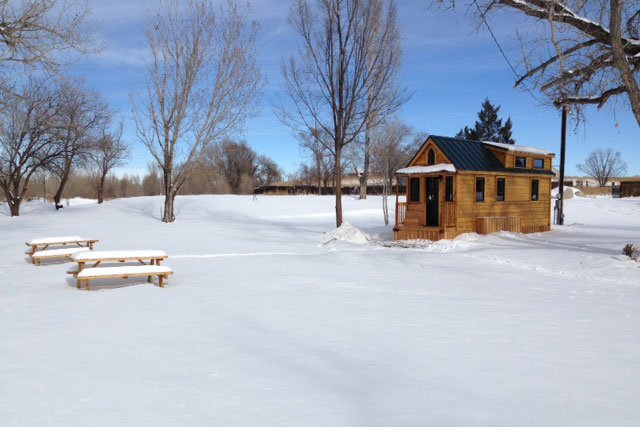
Don’t hesitate to jump on this opportunity to see a perfectly built Tumbleweed! Our talented builders in Colorado Springs have a freshly finished Fencl available for potential buyers to tour and view. To make arrangements weekdays between 8am and 5pm, just call first to make sure someone is there.
The location is 2108 Victor Place, Colorado Springs,Colorado 80915, and they can be reached at (855) 590-7433.
This Tumbleweed is ready to roll, with conduit prepared for your solar wiring, propane tanks, and a 30 gallon fresh water holding tank. The floor is finished in cork, and the RV furnace and spray in polyurethane insulation are ready to take on the coldest weather. Please enjoy touring this beautifully made Fencl - even if you’re interested in a differentTumbleweed model. It's so beautiful it probably won't be available to the public all that long, and seeing a tiny house in real life can do wonders in terms of helping fans figure out which model they prefer and how they’d like to use their space.
Kevin Stevens is a Class C certified Contractor living and working in Colorado. He is also working on his own tiny house project in Northern New Mexico. He has been following various aspects of the tiny house movement for years.
The
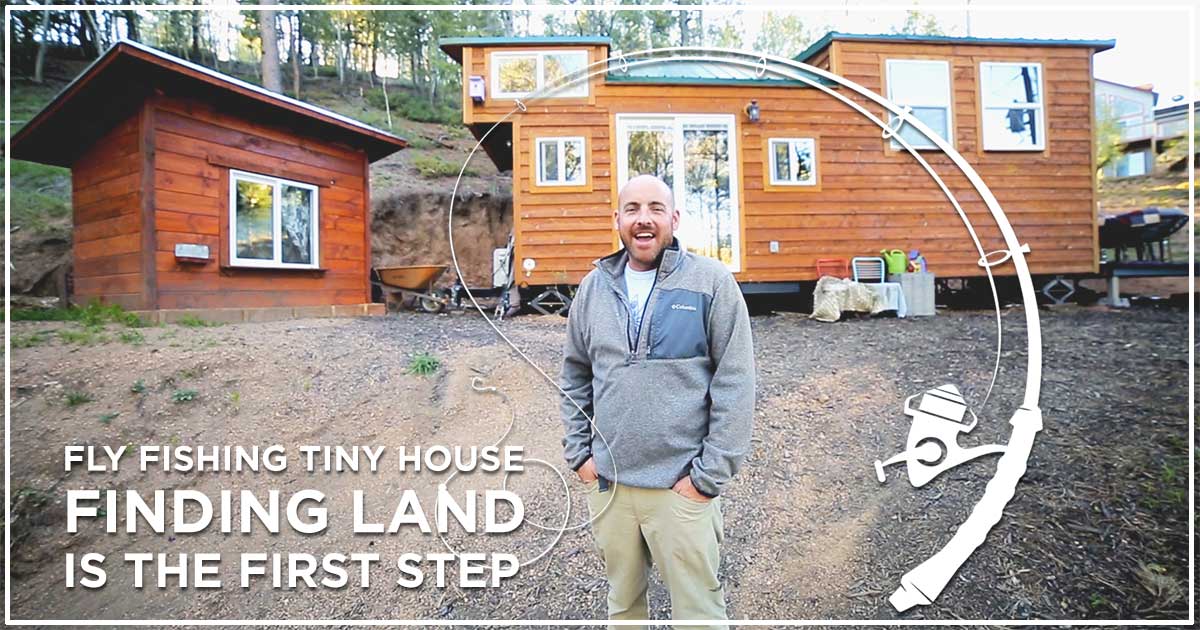
quest for our land was a quest to find more seasonal balance in our lives. Nederland has
been good to us: it has a slower pace then the “flats”, what we call Boulder and the
surrounding front range, but also gives us ready access to the culture of a
larger city when we feel the need for it. We still wanted to experience four seasons, so a place that still has a
winter was a desire- just not 9 months of it!
Last year we had snow just up the hill from us in the middle of
August. We have also watched the
fireworks on the 4th of July from inside the living room as a light snow was
falling. It is one of the hardships we
endure by living at over 8000 feet. However, the mild summers, 300+ sunny days a year and hearing cougars
and coyotes on a summer night do their part to make up for it.
View from our ranch at night
Both
Tori and I have been attracted to the desert, me for quite a few years
more. Road trips to Utah and points further west developed a
longing for the scent of sagebrush on the wind after a rainstorm. But the intense heat of summer steered us away
from places like Moab, and
most of Arizona. Creating art is a big part of our lives and
artist like other artists, so we thought
of desert areas that are supportive to artist. Naturally this led us to northern New
Mexico: Georgia O’Keeffe spent many years
there. Years ago I had traveled through Taos and admired the
landscape, the architecture, the food and culture. Sagebrush is abundant there along with
pinon, and Juniper, a lot of the locals simply call it the PJ. I have often bought pinon and Juniper incense
to recapture the scent from campfires there.
Our
land searching began online with some local real estate listings. A few months of looking gave us an idea of
what was available, we printed some listings, found them on maps and with
Google Earth looked to see what the area landscape might be. I also got in touch with a local real estate
agent there. In November of 2009 our
quest took on some more texture via a road trip, on the way also checked out
some areas in Colorado north of the Taos area. Armed with a digital camera and a GPS we
explored about half a dozen listings, one that was at the top of our list based
on the online pics, turned out to be a disappointment. The lot itself was
great, the soil was sandy in some areas, had some good mixed tree cover and
important to us had some great rock outcroppings and diversity of terrain.
The price was in our budget, and the
community was interesting (We spent an
afternoon at “Poco Loco” the local market / hangout for a neighborhood post
Halloween celebration.) Unfortunately
the entry to the lot had some “trashy” neighbors. The road in, which would be our future
driveway, had huge piles of junk near it, bottles, cans, misc. construction
stuff, old building projects etc. We
could just not bear to have to drive past that every day. We spent that night camping nearby on some
forest service land. I called up our
agent and arranged to meet her the next day for some more property tours.
After
hooking up with Liz, we toured some more vacant land and also some homes
located on some area parcels. Late in
the afternoon we hooked up with Gil and Deb for a tour of one of the four,
twenty-acre parcels they had for sale, they were friends of Liz from years past
and had not yet officially listed these lots.
The
lot that we had the most interest in was the one furthest from the highway and
it had some rock outcroppings along the southern edge. We liked it but were not
that impressed. The 80 acres they had
for sale was part of their larger ranch there- about 720 acres total. After we looked at the end parcel Gil wanted
to show us the Petaca which lies just east of their square mile. On the way to the overlook we saw an
interesting smaller side canyon and I asked if we could check it out. We hiked
up through there and were very impressed with it. We threw the idea out there that we liked
that area more. Ater touring the
overlook we took the ATV’s across the road and back into some cool nearby
forest service land. (I forgot to
mention that nearby access to public land was also a selection criteria for
us).
They
wined and dined us that night in one of their cabins across the road, put us up
for the night and let us borrow the ATVs again the next day. This time with the
aide of their old but somewhat accurate property map we checked out the area
that impressed us the day before. This
area was quite a bit larger than we were originally thinking, about 40 acres
(the first “trashy” place was only 7 acres- one of the earth ship properties was
12; Gill and Debs other lots 20) The beauty and peacefulness of it took hold
of us. We had found our place! We believe that certain areas have a type of
magnetism for some people: Tori and I call this “The Magic of Place"- we spent
the later part of that afternoon working with Liz to write up an offer.
Well, as
they say in the movies the rest is history! We now own just under 42 acres of
diverse: PJ with an abundance of Sagebrush ; )